How to pack fragile items for long distance removals
Fragile things always seem to hide at the worst possible moment. A chipped mug. A cracked lamp base. A glass frame that survived years on a shelf, then gave up halfway through a move. If you are trying to work out how to pack fragile items for long distance removals, the goal is simple: keep your breakables safe through bumps, stacking, temperature changes, and the general chaos of moving day.
Long distance removals are a different beast from a quick hop across town. Boxes sit in a vehicle longer, get shifted more, and may be loaded and unloaded in less predictable weather. That means the way you pack matters. A lot. This guide walks you through the best method, the common mistakes to avoid, and the practical choices that make fragile packing far less stressful. If you want extra help with the packing itself, you may also find packing and unpacking services useful for heavier or more delicate jobs.
Let's keep this honest: you do not need fancy gear for everything, but you do need the right approach. Good packing is mostly about patience, layering, and not letting empty space do damage. That part is easy to miss in a rush, and then the tape comes off, the box opens, and well... there's the sound nobody wants to hear.
Table of Contents
- Why packing fragile items properly matters
- How the packing method works
- Key benefits and practical advantages
- Who this is for and when it makes sense
- Step-by-step guidance
- Expert tips for better results
- Common mistakes to avoid
- Tools, resources and recommendations
- Law, compliance, standards, or best practice
- Options, methods, and comparison table
- Case study or real-world example
- Practical checklist
- Conclusion
- Frequently asked questions
Why packing fragile items properly matters
Fragile items are vulnerable in three main ways during long distance removals: impact, movement, and pressure. Impact is the obvious one. Movement is sneaky. Pressure is what happens when a heavy box gets stacked on top of the wrong thing, or when a half-empty box caves in because it was packed a bit too loosely.
That is why the standard "wrap it and hope for the best" approach usually fails. A long journey adds time, vibration, and repeated handling. Even if a box looks fine from the outside, the inside can be slowly working itself loose if the contents are not immobilised. Think of a teacup in a cardboard cave with nothing holding it still. It will not end well.
It also matters because fragile packing affects the whole removal, not just the breakables themselves. Badly packed boxes can slow down loading, make stacking unsafe, and increase the chance of damage to nearby furniture. If you are moving a home, this can quickly snowball into a much more stressful day. For bigger household moves, many people prefer to plan the whole move alongside home moving support or a trusted house removalists service, especially when there are multiple delicate items involved.
Expert summary: fragile packing is not about using more material for the sake of it. It is about creating a stable, cushioned, well-labelled system that protects items from movement for the full journey, not just the first ten minutes.
How the packing method works
The basic principle is simple: wrap, cushion, separate, fill, and label. Each layer has a job. Wrap protects the surface. Cushion absorbs shock. Separation stops items from touching. Filling removes empty space. Labelling tells everyone how the box must be handled.
For long distance removals, the packing process works best when you think in terms of box stability. A stable box has contents that cannot shift around, a strong base, and no soft spots. If you shake it gently and hear movement, the box still needs work. That little rattle is never a good sign.
Another useful idea is weight control. Fragile items often fail when they are packed too densely with heavy objects. A well-packed fragile box should be manageable to lift, even if it contains several items. If a box becomes too heavy, use fewer items per box and give each piece its own wrap and cushioning.
In real-world terms, this method gives you control over three variables: how much the item moves, how much pressure it receives, and how easy it is to stack safely in the vehicle. That is why packing fragile items for long distance removals is really a logistics problem as much as a wrapping job.
Key benefits and practical advantages
There is a very practical reason careful packing pays off: fewer breakages mean less stress, less wasted time, and fewer unpleasant surprises when the boxes are opened at the other end. But the benefits go beyond damage prevention.
- Safer handling: well-labelled, evenly packed boxes are easier to move without sudden shifts.
- Cleaner loading: sturdy boxes with proper cushioning can be stacked more predictably in a removal vehicle.
- Better unpacking: if each item is wrapped and grouped logically, unpacking is much faster later on.
- Lower replacement risk: carefully packed fragile goods are less likely to be lost to chips, cracks, or pressure damage.
- Less emotional fallout: this matters more than people admit. Some items are not expensive, just irreplaceable in a personal way.
There is also a commercial angle. If you are comparing services, it helps to know what level of packing support is included. Some people want full packing help, while others only need a vehicle or labour support. A man and van arrangement or man with van option can be a sensible fit for smaller loads, but fragile items still need the same careful packing standards regardless of the transport size.
One more advantage, often overlooked: good packing gives you a cleaner inventory. When each box has a clear category and proper label, you know exactly where the glasses are, which box has the mirror, and which one contains the bits you absolutely do not want buried at the bottom of the van.
Who this is for and when it makes sense
This advice is for anyone moving fragile items over a meaningful distance, but especially for people with mixed loads. That might mean a family home with kitchenware, framed artwork, lamps, and ornaments. It might mean a flat move with a few awkward but valuable things. It could also mean business moves involving displays, monitors, samples, or office decor. If you are planning a workplace move, commercial moves and office relocation services often involve a similar level of care, just with different kinds of fragile assets.
This approach makes sense when:
- you are moving fragile items more than a short local distance
- the route may involve multiple handling points
- the move spans a day or longer
- you have glass, ceramics, electronics, mirrors, artwork, or collectibles
- you want to reduce the chance of repair or replacement costs
It also makes sense if you are short on time. To be fair, most people are. Packing fragile goods properly can take longer than expected, especially if you are wrapping every piece individually. If that feels overwhelming, professional help may be the calmer route. And yes, sometimes the sensible option is the one that saves your weekend.
Step-by-step guidance
1. Start with the right materials
Before you pack anything, gather sturdy boxes, plenty of clean packing paper, bubble wrap, tape, markers, and padding material such as folded paper or soft wrap. Avoid flimsy used boxes that have lost their shape. They may look fine until you lift them. Then they do the cardboard equivalent of sighing and collapsing.
2. Sort fragile items by type
Group similar items together. Glasses with glasses. Plates with plates. Lamps with lamps, if possible. This helps you choose the right amount of protection and makes unpacking simpler. Mixed boxes are where confusion and damage often begin.
3. Wrap each item individually
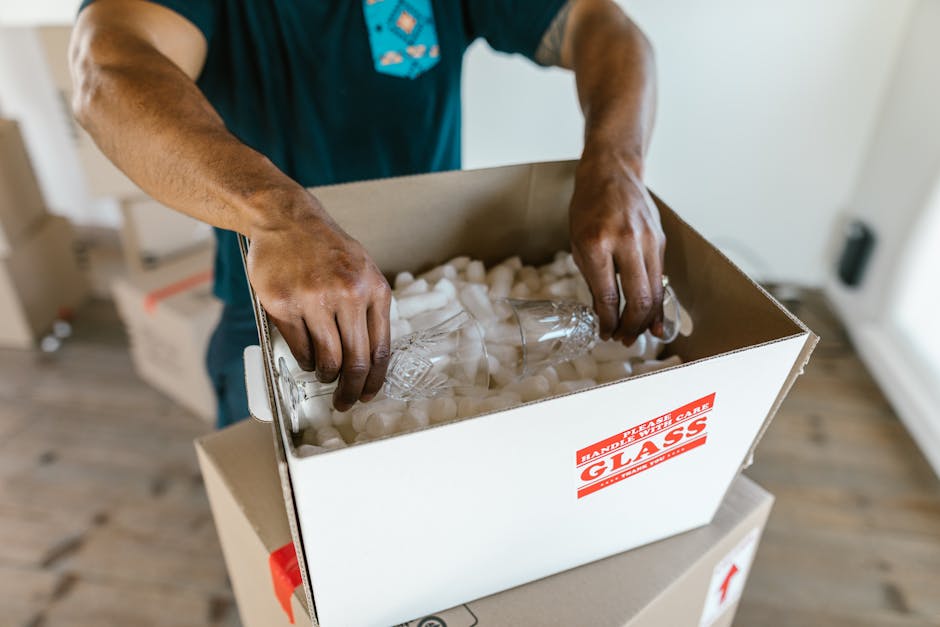
Do not stack bare items together and hope layers will magically protect them. Wrap each fragile piece separately. For glassware, place paper inside the item if appropriate, then wrap around the outside. For ceramics, use enough padding to cover corners and weak points. For artwork or mirrors, protect the surface first and then add corner support.
4. Build a cushioned base in the box
Put a layer of crumpled paper, folded cardboard, or similar cushioning at the bottom of the box. This reduces impact from being set down. The bottom layer is not decorative. It is doing real work.
5. Place heavier fragile items lower, lighter ones above
Within a fragile box, keep heavier items near the base and lighter items above them, but only if they are compatible. For example, plates may sit flat with padding between layers, while stemware should usually be packed upright and separated. Do not overload one box because it seems efficient at the time. Efficient, then impossible to carry.
6. Fill every gap
Empty space is the enemy. Any gap allows movement, and movement creates damage. Fill gaps with packing paper, soft cloth, or other non-damaging padding. When the box is closed, contents should feel snug, not crushed and not loose. Snug is the sweet spot.
7. Seal and label clearly
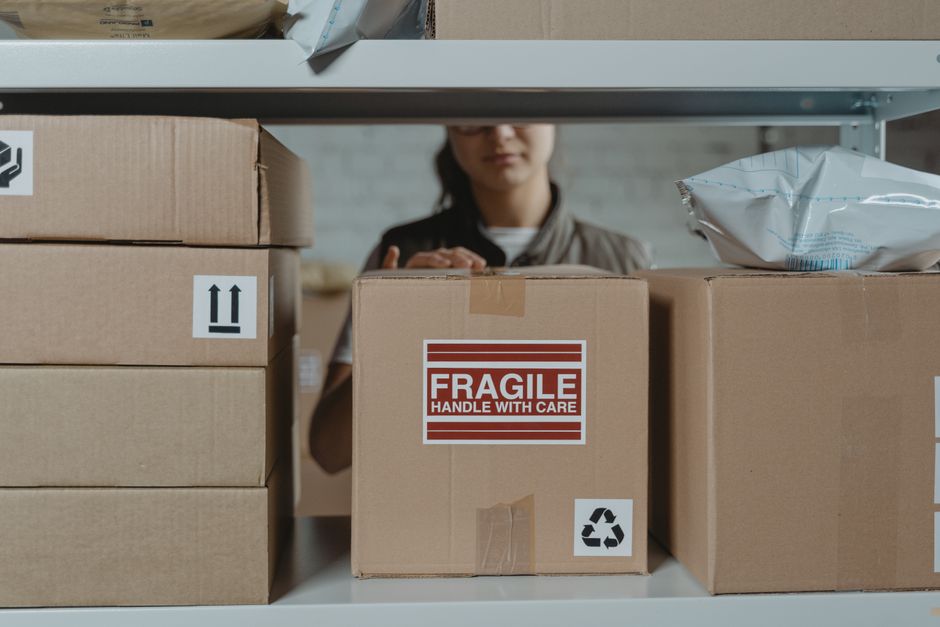
Seal the box well with tape. Then label it on several sides with clear words like Fragile, This Way Up, and the room it belongs in. A good label saves time later and helps the movers know how to position it. If you are using professional moving support, clear labels can make a noticeable difference to handling speed.
8. Keep essential fragile items separate
Some items are so important that they should not be buried in a van or truck. Things like medication-related equipment, daily-use glasses, or a child's favourite mug may need to travel with you personally, not with the rest of the load. That is a judgement call, but often an obvious one when you see the item sitting there on the kitchen counter at 7am.
9. Load the vehicle with care
Fragile boxes should not be crushed under heavy furniture. They need stable positioning and a secure place in the load. For larger moves, the choice of vehicle matters too, which is why some people look into moving truck options or removal truck hire when they need more space and better load control.
Expert tips for better results
Small improvements make a surprisingly big difference with fragile packing. Here are the details that tend to separate decent packing from genuinely good packing.
- Use smaller boxes for the most delicate items. They are easier to carry and less likely to be overfilled.
- Double-box valuable items. This means placing a well-wrapped item inside a smaller box, then cushioning that box inside a larger one. It is extra work, yes, but worth it for items you really care about.
- Protect corners first. Corners are the first places to take damage on frames, mirrors, and ceramics.
- Keep glass upright where possible. This reduces pressure on the widest face and is often safer than laying pieces flat, depending on the item.
- Separate plates with padding. Plates packed flat without separators can knock against each other over a long journey.
- Do a gentle shake test. If you hear motion inside the box, reopen it and add more padding.
- Pack one room at a time. This helps avoid a chaotic pile of random breakables in the last box of the day.
A small real-world observation: most damage does not happen because people forgot to wrap the item. It happens because they wrapped it, then let it move. That is the bit people miss. Movement is the silent culprit.
If your removal includes old items you no longer want, you may also want to look at furniture pick up or think ahead about what can be reused or recycled. A move is a good time to be a bit ruthless, in the nicest possible way.
Common mistakes to avoid
Even careful movers make a few predictable errors. None of them are mysterious, and most are easy to prevent once you know what to watch for.
- Using newspaper on delicate surfaces without checking the ink risk. It can mark some items, especially pale finishes or fine glassware.
- Overpacking boxes. Too much weight makes the box harder to carry and more likely to split.
- Leaving gaps inside the box. Empty space means movement. Movement means chips and cracks.
- Mixing heavy and fragile items together. A mug next to a bottle of cleaning product is asking for trouble.
- Forgetting to label clearly. "Kitchen" is not the same as "Fragile Kitchen, Top Load Only."
- Using soft boxes or weak tape. Good packing materials are boring, but they work.
- Assuming the journey is the only risk. Loading and unloading are just as risky, sometimes more so.
Truth be told, the most common mistake is rushing the last 10%. That's the bit where people get tired, start improvising, and decide a half-filled box will probably be fine. It usually isn't.
Tools, resources and recommendations
You do not need a warehouse of supplies, but a few items make life much easier.
| Item | Why it helps | Best use |
|---|---|---|
| Sturdy small boxes | Reduce overloading and make fragile items easier to handle | Glassware, ornaments, mugs, accessories |
| Packing paper | Fills gaps and wraps items without adding too much bulk | Most kitchen and household breakables |
| Bubble wrap | Provides cushioning for shock-prone items | Frames, ceramics, electronics, lamps |
| Strong packing tape | Keeps boxes sealed and stable during transit | Every fragile box |
| Markers and labels | Makes handling and unpacking much easier | Box sides and top |
| Corner protectors | Helps protect vulnerable edges | Mirrors, artwork, screens |
For people who would rather not source everything themselves, the practical option is often to combine DIY sorting with professional help. That can include full service packing or a more limited loading arrangement. If you are comparing transport choices, you might also look at house removalists for a broader moving service, depending on how much of the job you want handled.
One useful recommendation: keep a "fragile essentials" box aside for the first night. Think kettle cups, a spare plate set, chargers, and a few items that stop the new place from feeling like a storage unit. It sounds small, but it saves a lot of rummaging when you are tired and slightly grumpy after the move.
Law, compliance, standards, or best practice
For most home moves, fragile packing is guided more by best practice than by strict legal rules. That said, there are a few sensible standards to keep in mind.
First, movers and customers should handle items safely to avoid injury and damage. This is especially true with heavy boxes, awkward shapes, or glass that could break during lifting. Good manual handling is part of basic moving safety, whether you are doing the job yourself or using professionals. If you are booking a provider, it is worth checking their health and safety policy and insurance and safety information so you understand how they approach risk.
Second, if you are moving valuable or sentimental items, it is sensible to check the removal terms carefully. Policies can differ on what is covered, what needs to be declared, and how packing responsibilities are divided between customer and mover. Reading the terms and conditions before moving day is not glamorous, but it can prevent awkward surprises later.
Third, if you are disposing of broken items or old packaging after the move, consider reuse and recycling where possible. Practical sustainability matters here. Many people are already trying to cut waste during a move, and that is where a page like recycling and sustainability becomes relevant to planning. Nobody needs a mountain of plastic wrap in the hallway if it can be avoided.
Finally, if a payment is involved for professional help, use secure and verified processes. If you are making a booking or paying a deposit, it is worth reviewing payment and security details in advance. That is just sensible, not overcautious.
Options, methods, and comparison table
Not every fragile item needs the same treatment. A mug, a mirror, and a television screen all need protection, but the method varies. Here is a simple comparison to help you choose the right approach.
| Item type | Best packing method | Key risk | Helpful note |
|---|---|---|---|
| Glassware | Wrap individually, pack upright, fill gaps | Impact and side pressure | Use smaller boxes |
| Plates | Wrap in stacks with separators | Edge chipping | Do not overstack |
| Mirrors and frames | Corner protection and surface padding | Corner impact, flexing | Double-box larger pieces |
| Ceramics | Individual wrapping with cushioning | Cracks from movement | Keep upright when possible |
| Electronics | Original box if available, otherwise firm cushioning | Shock and internal movement | Remove loose parts first |
| Ornaments/collectibles | Layered wrap with plenty of fill | Knocks and pressure | Mark as fragile on multiple sides |
Another useful way to think about it is by method choice:
- Basic wrap-and-box: fine for sturdy fragile items like mugs or simple ceramics.
- Reinforced packing: better for glass, framed pieces, and anything with edges or corners.
- Double boxing: best for valuable or especially breakable items.
- Professional packing: ideal when time is short, the load is complex, or you simply do not want the hassle.
Case study or real-world example
A typical long-distance home move might include a kitchen crate, two framed prints, and a lamp with a glass shade. Nothing dramatic on its own. But the details matter. The kitchen items are wrapped individually, the prints are protected with cardboard corners and placed flat in a rigid box, and the lamp shade is boxed separately with soft fill around the edges. Each box gets a clear label and is loaded so it cannot be crushed by heavier furniture.
What tends to go wrong in less careful moves? The lamp shade gets tucked into a larger box "for space", the frames end up with a heavy blanket on top, and the glasses are packed loose because someone thought paper around the outside would be enough. By the time the boxes arrive, everything looks fine until the unpacking starts. Then you discover the tiny chip on the frame, the wobbling lamp, the glass that did not quite survive the road. Not ideal.
The difference in this kind of move is not dramatic on the outside. The boxes still look like boxes. But inside, the careful one has no movement, no pressure points, and no surprises. That is the real win. It feels uneventful, which is exactly what you want.
If the move is especially large or the fragile items are part of a broader household relocation, some people bring in help from home moves support or a more hands-on man and van arrangement depending on scale. There is no single right answer. The right answer is the one that keeps the stuff safe and keeps your nerves intact.
Practical checklist
Use this before sealing the last box. Seriously, it helps.
- Have I chosen sturdy boxes that match the item size?
- Is each fragile item wrapped individually?
- Have I filled all empty spaces inside the box?
- Have I avoided mixing heavy and delicate items together?
- Have I protected corners, edges, and glass surfaces?
- Is the box weight still manageable to lift?
- Have I used enough tape to keep the box secure?
- Have I labelled the box as fragile and noted the room?
- Have I separated essential items I may need immediately after arrival?
- Have I checked whether any items need extra insurance or special handling?
- Have I kept a small opening-night box aside for essentials?
Quick takeaway: if the box can move around inside itself, it is not finished yet.
Conclusion
Learning how to pack fragile items for long distance removals is really about removing guesswork. Once the items are wrapped properly, cushioned well, and loaded with care, the entire move becomes calmer. You are not hoping for the best anymore. You are building in protection.
That is the difference between a stressful move and a controlled one. A few extra minutes with paper, tape, and labels can save a lot of trouble later on. And if the job is bigger than you want to handle alone, it is completely reasonable to ask for help. Moving is one of those life jobs that looks simple until you are standing in a room full of boxes at 9pm wondering why you own so many glasses.
If you are planning a move and want to compare options, get a clear idea of costs, or arrange support for fragile packing and transport, the safest next step is to review your service choices and plan early. A little preparation now makes the arrival feel much lighter later.
Get a free quote today and see how much you can save.
In the end, a good move is one where the fragile things arrive looking exactly as they left. Quietly, safely, and without drama.
Frequently Asked Questions
What is the best way to pack fragile items for long distance removals?
The best method is to wrap each item individually, use a sturdy box, fill all gaps with cushioning, and label the box clearly. The goal is to stop movement inside the box while protecting corners and surfaces from impact.
Should I use bubble wrap or packing paper for fragile items?
Both can work, and they often work best together. Packing paper is useful for wrapping, separating, and filling gaps. Bubble wrap gives stronger cushioning for breakable or impact-prone items. For many household items, a mix of both is the safest choice.
Can I pack glassware together in one box?
Yes, but only if each piece is wrapped separately and the box is not overfilled. Glassware should be snug, upright where possible, and fully supported so the items cannot knock against each other in transit.
How do I pack plates for a long move?
Wrap plates individually or in small stacks with separators between them, then place them vertically or in the orientation recommended by the packing method you are using. Fill all empty space so they cannot shift during the journey.
How do I protect mirrors and framed artwork?
Use corner protectors, wrap the surface carefully, and place the item in a rigid box with enough padding to prevent flexing. Larger mirrors and frames may benefit from double boxing or professional handling, especially on longer journeys.
Should fragile boxes be marked on all sides?
Yes, that is a sensible practice. Clear labels on more than one side make it easier for movers to spot fragile loads quickly, even when boxes are stacked. It helps with both handling and unpacking.
Is it worth paying for professional packing services?
If you have many breakables, limited time, or valuable items, professional packing can be worth it. It reduces stress and usually improves consistency, especially when the move is long distance or involves mixed loads.
What items should I keep with me instead of putting on the moving truck?
Keep essential daily-use items, highly sentimental pieces, and anything especially delicate or important to you personally if you are worried about access or handling. If in doubt, the items you would be upset to lose should be thought about twice.
How early should I start packing fragile items before moving day?
Start as early as you reasonably can, especially for non-essential items. Fragile packing takes longer than most people expect, and leaving it to the last evening usually leads to rushed decisions and weaker packing.
Do I need special boxes for fragile items?
Not always, but sturdy boxes in the right size make a big difference. Small to medium boxes are often better for delicate items because they are easier to lift and less likely to be overloaded. Double boxing can help for valuable pieces.
What should I do if an item is too valuable to risk?
Pack it with extra care, consider double boxing, and keep it with you if that feels safer. For very valuable or irreplaceable items, getting specialist advice or professional packing support is usually the sensible move.
How do I know if my fragile box is packed properly?
Give it a gentle shake. If you hear movement, it needs more cushioning. The box should feel snug, stable, and easy to carry without bending or bulging. If it looks too tight or too loose, adjust it before sealing.